Home Mind Fusion Golden Clarity The Mushrooms Shop Now
Lion's Mane and Chaga mushrooms
The Science of Two

Ancient fungi.
Modern clarity.

Lion's Mane and Chaga have been used for centuries across East Asia and Northern Europe. Modern science is now catching up — understanding why these two fungi have been trusted by healers, scholars, and warriors for longer than most medicines have existed.

Lion's Mane

Native to East Asia. Used in Chinese medicine since the Han Dynasty (~200 BC). Known as "Yamabushitake" in Japan — the mushroom of the mountain monks who sought clarity of mind.

Chaga

Found on birch trees in Siberia, Northern Europe, and Canada. Used in Russian folk medicine for centuries. Known as "The King of Herbs" — revered for its extraordinary antioxidant content and immune-supporting properties.

Together

Both appear in KŎVR Mind Fusion and Golden Clarity — Lion's Mane for cognitive focus, Chaga for immune resilience and antioxidant depth. Chosen because they complement each other and complement coffee.

Chapter I

Lion's Mane.
The mushroom that thinks.

Of all the functional mushrooms studied in modern science, Lion's Mane stands alone in one remarkable regard: it is the only known natural source of compounds that directly support the brain's ability to grow and repair itself.

What it is

Lion's Mane (Hericium erinaceus) is a large, white mushroom with distinctive cascading tendrils — resembling, as its name suggests, the mane of a lion. It grows on dead or dying hardwood trees across North America, Europe, and Asia, most commonly on oak, beech, and walnut. In the wild it is rarely found; cultivated forms are now widely available.

It has been consumed as a food across East Asia for millennia — prized as much for its delicate, seafood-like flavour as for its medicinal properties. In traditional Chinese medicine it was prescribed for stomach ailments, as a general tonic, and to support mental clarity. Buddhist monks reportedly consumed it as a tea to enhance their capacity for focus during long meditation sessions.

"The mushroom of the mountain monks — consumed for clarity of mind, consumed before scholarship, consumed before silence."

How it was discovered — and by whom

The earliest written records of Lion's Mane date to the Chinese pharmacopeia of the Han Dynasty, around 200 BC. The Shen-nung pen ts'ao ching — the first materia medica in traditional Chinese medicine — references it as a tonic mushroom with restorative properties.

In Japan, it was known as Yamabushitake — "the mushroom of the Yamabushi," itinerant mountain monks who wore robes resembling the mushroom's shaggy appearance. These monks are said to have brewed it into tea to sustain mental endurance during their solitary practices in the mountains.

Modern scientific investigation began in earnest in the late 20th century. In 1991, Japanese researchers first isolated hericenones from the fruiting body — compounds found to stimulate Nerve Growth Factor (NGF) synthesis in laboratory settings. Later, erinacines were identified in the mycelium, with even stronger NGF-stimulating activity and the ability to cross the blood-brain barrier in animal studies.

Why it matters — the NGF pathway

Nerve Growth Factor (NGF) is a protein essential to the growth, maintenance, and survival of neurons in the brain and peripheral nervous system. It plays a critical role in the formation of new neural connections — the biological process underlying learning, memory formation, and cognitive plasticity.

As we age, NGF activity naturally declines. This decline is associated with reduced cognitive performance, slower information processing, and — at its most severe — neurodegenerative conditions including Alzheimer's disease. Lion's Mane is the only known natural source of hericenones and erinacines, compounds that appear to support NGF synthesis from within the body.

Unlike caffeine, which works through adenosine receptor blockade to create alertness, Lion's Mane works on the underlying infrastructure of cognition — not a temporary boost, but gradual, cumulative support for the brain's own mechanisms.

What the research shows

Human clinical research on Lion's Mane is still in early stages, but several published trials have produced notable results. A 2009 double-blind, placebo-controlled trial published in Phytotherapy Research found that adults aged 50–80 with mild cognitive impairment who took 3g/day of Lion's Mane powder for 16 weeks showed significantly improved scores on cognitive function scales compared to placebo — with scores declining again after supplementation stopped, suggesting benefits require consistent use.

A 2023 pilot study in healthy young adults (ages 18–45) found that a single dose of 1.8g Lion's Mane produced faster performance on cognitive reaction tasks at 60 minutes post-dose, with a trend toward reduced subjective stress after 28 days of supplementation.

Research into Lion's Mane's effects on mood, anxiety, and sleep quality is ongoing, with several clinical trials currently in progress. The general picture that emerges is one of a compound that works gently, consistently, and cumulatively — not dramatically, not immediately, but meaningfully over weeks.

~200 BC

First written records

Shen-nung pen ts'ao ching documents Lion's Mane as a restorative tonic mushroom in traditional Chinese medicine.

~1100s

Yamabushitake

Japanese mountain monks (Yamabushi) adopt Lion's Mane tea as a practice for sustaining mental endurance and focus.

1991

Hericenones isolated

Japanese researchers identify hericenones in Lion's Mane fruiting body — compounds found to stimulate NGF synthesis in vitro.

1994

Erinacines discovered

Erinacines identified in Lion's Mane mycelium — more potent NGF stimulators shown to cross the blood-brain barrier in animal models.

2009

First human RCT

Double-blind trial shows 3g/day Lion's Mane significantly improves cognitive function scores in adults with mild cognitive impairment over 16 weeks.

2023

Healthy adults trial

Pilot study shows acute cognitive benefits in healthy young adults after a single dose; stress reduction trend after 28-day supplementation.
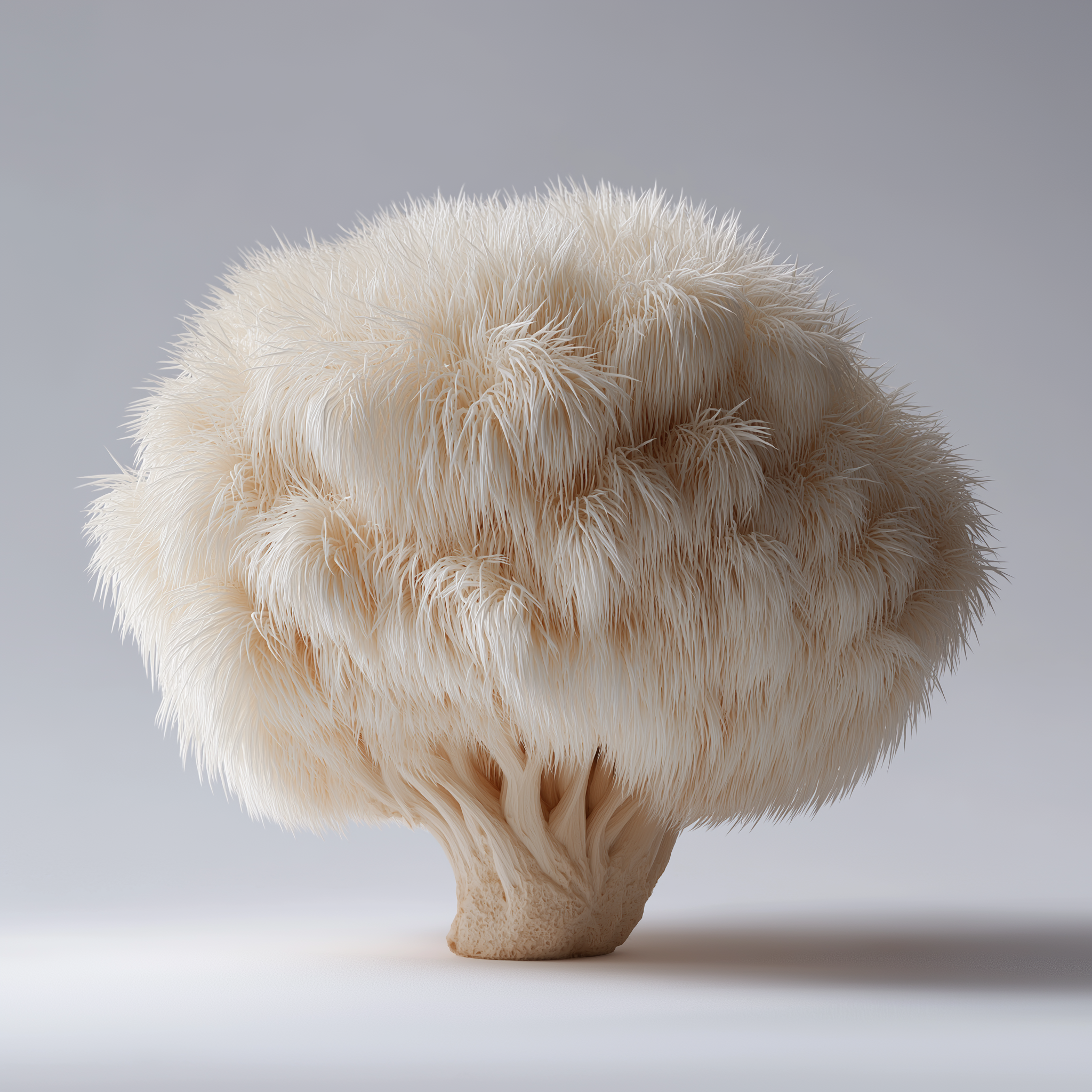
Lion's Mane mushroom — Hericium erinaceus

Hericium erinaceus — the cascading white tendrils are unlike any other known fungus. Fresh specimens have a delicate, seafood-like flavour when cooked.

Key compounds
Found in

Hericenones

Fruiting body. Stimulate NGF synthesis. First isolated 1991.

Found in

Erinacines

Mycelium. Cross blood-brain barrier. Stronger NGF activity than hericenones.

Also present

Beta-glucans

Polysaccharides that support immune function and provide antioxidant activity.

Chapter II

Chaga.
The king of the forest.

Chaga is not conventionally beautiful. It grows as a dark, charcoal-like mass on birch trees in the coldest climates on Earth — Siberia, Scandinavia, Northern Canada, the forests of Northern Japan. But inside that rough exterior is one of the most concentrated sources of antioxidants found anywhere in nature.

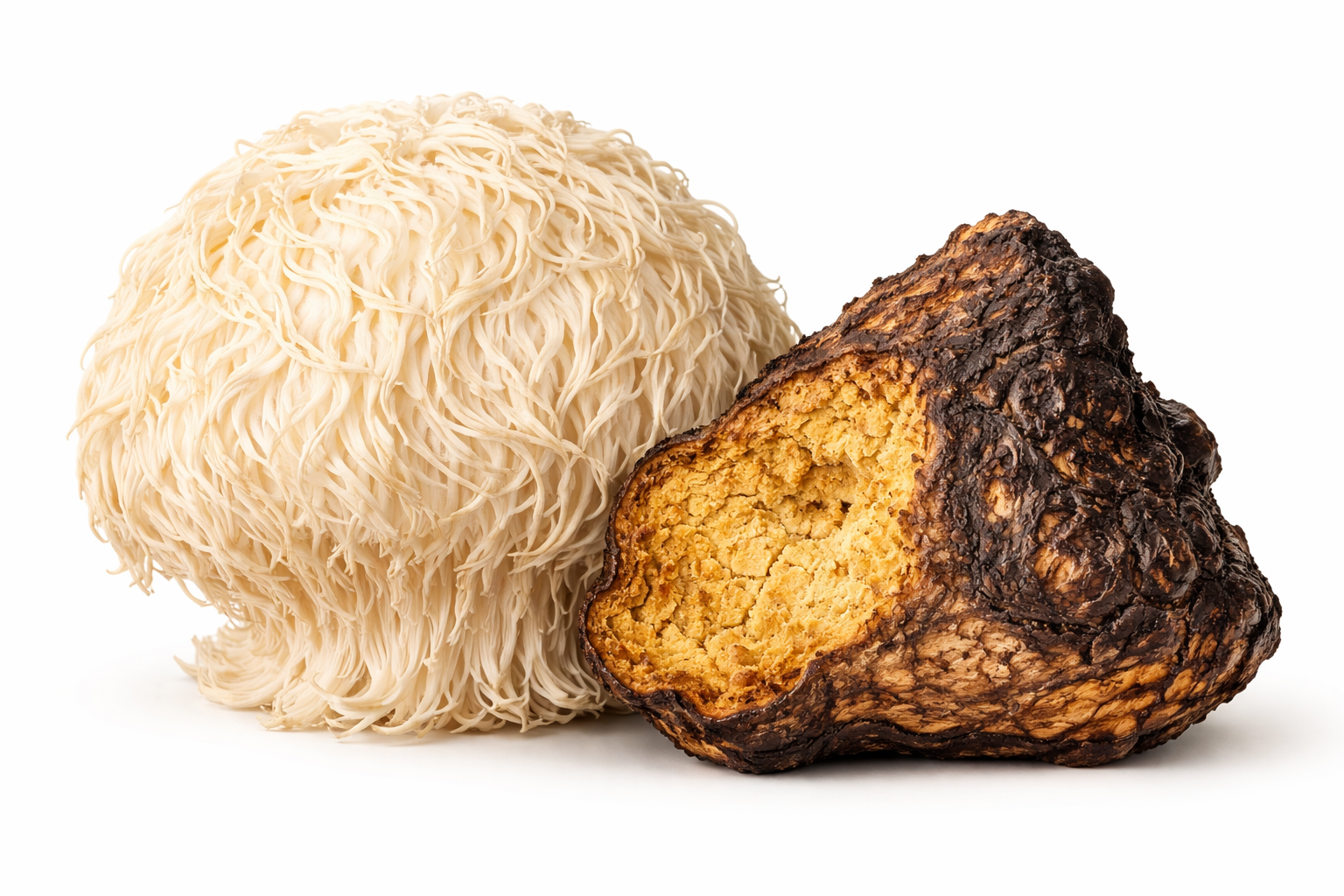
Lion's Mane and Chaga mushrooms together

Lion's Mane (left) and Chaga (right) — two fungi from opposite ends of the natural world, brought together in KŎVR for complementary function.

Key compounds
Primary
Beta-glucan polysaccharides
Immune modulation, anti-inflammatory activity
Primary
Melanin
Exceptional antioxidant capacity, contributes to dark colour
Secondary
Terpenoids (betulinic acid)
Derived from birch tree. Anti-tumour properties in early research.
Secondary
Polyphenols & phenolic acids
Gallic, protocatechuic, p-hydroxybenzoic acids. Antioxidant activity.

What it is

Chaga (Inonotus obliquus) is technically not a mushroom in the conventional sense — it is a parasitic fungus that invades the living wood of birch trees, growing beneath the bark over a period of decades and eventually producing the dark, cork-like mass visible on the tree's surface. That mass is the part harvested for medicinal use. The interior is a rich amber colour — dense with bioactive compounds concentrated over years of growth.

Its dramatic outer appearance earned it a long list of traditional names: "black gold of the forest," "the gift of God" (in Siberian shamanic traditions), "cancer of the tree" (a frank acknowledgement of its parasitic nature). In traditional Chinese medicine, it appears in the Shen-nung pen ts'ao ching as one of the highest-ranked tonic fungi — ahead of ginseng in some historical rankings.

"In Siberia they called it Chaga — brewed as tea across centuries of bitter winters, passed between generations as the simplest form of immune protection known."

Where it grows — and why that matters

Chaga grows almost exclusively on birch trees in cold-climate regions — Siberia, Scandinavia, Northern Canada, Alaska, Northern Japan and Korea. The birch connection is significant: Chaga absorbs betulinic acid and other compounds from its host tree, compounds not found in Chaga grown on other species. Wild Siberian Chaga, harvested from mature birch trees, is considered the gold standard — richer in bioactive compounds than cultivated forms.

The extreme cold of its natural habitat appears to intensify Chaga's antioxidant content. Organisms that survive in harsh conditions often develop exceptional protective chemistry — and Chaga is no exception. Its ORAC (Oxygen Radical Absorbance Capacity) value is among the highest recorded for any natural food source, significantly exceeding blueberries, pomegranates, and other well-known antioxidant foods.

Centuries of use — from Siberia to Scandinavia

The first documented use of Chaga as medicine appears in 16th-century Russian herbalist texts, where it is recommended as a tea for digestive ailments, skin conditions, and as a general strengthening tonic. Russian peasants in Siberia brewed it regularly as a coffee substitute during periods of shortage — a tradition that persisted through both World Wars.

In Finland and other Scandinavian countries, Chaga tea has been consumed for centuries as a daily health practice. The Finnish word for Chaga — pakuri — reflects its deep cultural integration. In traditional Korean medicine (hanbang), it was used as an immune tonic and anti-fatigue agent.

In the 1960s, Russian Nobel laureate Aleksandr Solzhenitsyn wrote about Chaga in his novel The Cancer Ward — describing how peasants in rural Russia used it as a folk remedy for cancer, bringing international attention to the mushroom for the first time in the Western world.

What science says

Modern research on Chaga has focused primarily on its antioxidant, anti-inflammatory, and immune-modulating properties. Laboratory and animal studies have demonstrated impressive results across multiple mechanisms — though human clinical trials remain limited, and most benefits currently documented are preclinical.

The beta-glucan polysaccharides in Chaga have been shown in multiple studies to modulate Th1/Th2 cytokine production — the immune system's signalling molecules — supporting more balanced immune responses. Its triterpenes, including betulinic acid derived from birch, have shown antiproliferative and apoptotic effects against several cancer cell lines in vitro, though no clinical conclusions can be drawn from this alone.

Perhaps most practically relevant is Chaga's role as an adaptogen — a substance that helps the body maintain homeostasis under stress. Daily use appears to support the body's stress response systems, contributing to more even energy levels, better recovery from physical and mental exertion, and reduced inflammatory load over time.

~200 BC

Chinese materia medica

Shen-nung pen ts'ao ching records Chaga among the highest-ranked tonic fungi, above ginseng in some classifications.

1500s

Russian herbalist texts

First European documentation of Chaga as a medicinal tea for digestive ailments and general fortification.

1940s

WWII Siberia

Chaga used as coffee substitute and daily health tonic across Siberian communities during wartime shortages.

1968

Solzhenitsyn

"The Cancer Ward" brings Chaga to international attention — describing its use as folk remedy in rural Russia.

1990s–2000s

Beta-glucan research

Modern immunology begins characterising Chaga's polysaccharides and their immune-modulating mechanisms in laboratory settings.

2010s–now

Antioxidant studies

ORAC testing confirms Chaga among the highest antioxidant-density natural foods. Research into anti-inflammatory and adaptogenic effects expands.

Chapter III

Who reaches for
mushroom coffee?

Not everyone. But for the right person — someone who is already intentional about what they put in their body, already performing at a high level, and looking for an edge that doesn't come from another stimulant — mushroom coffee changes the morning routine permanently.

I

The high-performance professional

Long hours. High-stakes decisions. A mind that needs to be sharp at 9am and still reliable at 6pm. Lion's Mane's support for sustained cognitive function, combined with caffeine's immediate lift, delivers the kind of clean focus that doesn't end in an afternoon crash. Mushroom coffee becomes the morning ritual that sets the register for the whole day.

II

The frequent traveller

Time zones. Hotel rooms. Airport lounges at 5am. The body under travel stress is the body under immune stress — disrupted sleep, recirculated air, compressed schedules. Chaga's adaptogenic and antioxidant properties support the body's resilience through exactly this kind of sustained pressure. Mind Fusion's instant format means the ritual never requires equipment that isn't in the hotel room.

III

The person who loves coffee but hates the aftermath

Acid reflux. Jitters. The 2pm energy crash. Heart racing after the second cup. These are the signs of a body not handling coffee well — often the caffeine itself, but often the acidity or the absence of any balancing compound. Mushroom coffee — especially Golden Clarity's low-acidity formula — addresses all three: gentler on the stomach, mushrooms that soften the stimulant curve, and a slower, more sustained energy arc.

IV

The athlete and active person

Caffeine has well-documented ergogenic effects — improved endurance, strength output, reaction time, and mental focus during physical performance. Lion's Mane may add a further layer: supporting the neural pathways associated with motor learning, coordination, and recovery. Chaga's anti-inflammatory properties may support recovery from training stress. The combination is increasingly popular in athletic performance circles.

V

The intentional wellness practitioner

Someone who already thinks carefully about nutrition, supplementation, sleep, and stress management. For this person, mushroom coffee is not a novelty — it's a logical integration. Replacing a daily coffee with a functional coffee means every morning ritual now delivers both pleasure and purpose. No separate supplement capsules. No extra steps. Just the cup they were already going to make.

VI

The person over 40

Cognitive decline is not sudden — it begins gradually, decades before it becomes noticeable. The NGF pathway that Lion's Mane supports is exactly the pathway whose activity naturally decreases with age. Chaga's antioxidant depth addresses the oxidative stress that accumulates over decades of living. For people in their 40s, 50s, and beyond, functional mushroom coffee is arguably most relevant — an early, consistent investment in cognitive and immune health.

Chapter IV

How much do you
actually need?

This is the question most mushroom coffee brands avoid answering honestly. The answer matters — because underdosed mushrooms in an oversized blend are marketing, not medicine. Here is what the research actually shows.

Lion's Mane — what the studies used

Clinical trials on Lion's Mane have used a wide range of doses, and the research is still in early stages. The most frequently cited human trials used whole mushroom powder — not extract — at the following daily doses:

The landmark 2009 Mori et al. RCT used 3,000mg/day (3g) over 16 weeks and showed significant cognitive improvement. A 2023 pilot study in healthy adults used 1,800mg/day (1.8g) and showed acute and trend effects. Some trials for mood and anxiety used 2,000mg/day. The general evidence-informed range for cognitive support is 500mg to 3,000mg daily of whole mushroom powder.

KŎVR Mind Fusion provides 300mg per serving, and Golden Clarity provides 500mg per serving. At one to two cups per day, this places users in the lower-to-middle part of the studied range — below the doses used in the most rigorous trials, but within the range where early effects have been observed, and consistent with the approach taken by most functional food products (as opposed to clinical supplement doses).

The honest assessment: mushroom coffee is not a clinical supplement. It is a functional food — a delivery vehicle that makes daily mushroom consumption easy, enjoyable, and consistent. Consistency over weeks is what the research supports above all else. A 300mg or 500mg daily dose, taken every morning without fail, is more likely to produce results than a 3,000mg dose taken three times a week.

Chaga — what we know

Chaga has very little human clinical trial data — most of the research is preclinical (cell studies and animal models). This makes dosage recommendations difficult to ground in the same way. Health Canada, which has one of the more rigorous natural health product regulatory frameworks, has published mushroom monographs that set a maximum daily intake for Chaga at 3,600mg/day.

Common functional supplement capsules provide 500mg to 2,000mg daily. KŎVR Mind Fusion provides 300mg per serving; Golden Clarity provides 500mg. These are conservative, safe doses well within regulatory guidelines — appropriate for daily, long-term use without concern.

The primary value of Chaga at these doses is its exceptional antioxidant content. Even at 300–500mg per serving, the density of beta-glucans, melanin, and polyphenols in Chaga makes it a meaningful daily antioxidant contribution — the equivalent of a concentrated antioxidant food rather than a pharmaceutical intervention.

The pixie dusting problem

Many mushroom coffee products on the market contain five, six, or even eight different mushrooms. This sounds impressive. The reality is arithmetical: if a product contains 1,000mg of total mushrooms across eight species, each mushroom receives approximately 125mg — a dose so small as to be functionally negligible for most purposes.

This practice is called "pixie dusting" in the supplement industry — adding ingredients at doses too low to work, for the purpose of being able to list them on a label. KŎVR uses two mushrooms, each at a meaningful dose. Two focused choices, honestly labelled, with nothing diluted.

MushroomKŎVR Mind FusionKŎVR Golden ClarityStudied range
Lion's Mane300mg / serving500mg / serving500–3,000mg/day
Chaga300mg / serving500mg / serving500–2,000mg/day
Total (1 cup)600mg1,000mg
Total (2 cups/day)1,200mg2,000mg
Health Canada max (Chaga)3,600mg/dayWell within limits
Neural network — Lion's Mane NGF pathway

Lion's Mane supports Nerve Growth Factor (NGF) synthesis — the brain's own mechanism for building and maintaining neural connections.

When to expect results
Day 1
Caffeine works immediately. Some report acute clarity from Lion's Mane within an hour.
Week 1–2
Most new users notice the change in energy curve — less edge, more even. The earthy notes become familiar.
Week 4–8
Where most clinical trials show cognitive and mood effects beginning to emerge. The NGF pathway works slowly.
Month 3+
Regular users report the most consistent benefits with long-term daily use. This is a ritual, not a remedy.
Chapter V

Together
in KŎVR.

Lion's Mane and Chaga were not chosen arbitrarily. They were chosen because they do different things — and because those different things complement each other, and complement coffee, in a way that five or six mushrooms divided thin never could.

Lion's Mane — what it brings

The cognitive layer

Lion's Mane works on the brain's own growth mechanisms. It does not stimulate — it supports. Its NGF pathway activity builds gradually, producing clarity that feels earned rather than chemical. It is the forward-facing mushroom: helping you think better, process faster, remember more.

In the context of coffee, it complements caffeine perfectly — caffeine provides the immediate signal, Lion's Mane deepens the underlying capacity.

Chaga — what it brings

The protective layer

Chaga works on the body's defences. Its antioxidant density addresses oxidative stress — the accumulation of free radical damage that underlies ageing, chronic inflammation, and immune decline. It is the backward-facing mushroom: protecting what you've built, shielding the system from daily assault.

Its adaptogenic properties also help buffer caffeine's stimulant effects — contributing to the calmer, more even energy curve that KŎVR users consistently report.

"One mushroom for what you're becoming. One for what you're protecting. Both in every cup."

— KŎVR

Ready to start
the ritual?

Two products. Two formats. The same two mushrooms, at meaningful doses. Choose the ritual that fits your life.

Instant — Travel Ready
Mind Fusion
Papua New Guinea Single Origin · 27 Servings
300mg Lion's Mane + 300mg Chaga per serving
$26.99
−20% Launch
$21.59
Learn more →    Shop
Ground — Low Acidity
Golden Clarity
Brazil & Mexico Blend · 34 Servings
500mg Lion's Mane + 500mg Chaga per serving
$26.99
−20% Launch
$21.59
Learn more →    Shop

Limited time launch pricing — 20% off on Amazon. Subscribe & Save for $19.86/month.

Language